Wednesday, October 20, 2010

Desert Eagle Gold Bb Gun Uk

Glossary About Us Polyhedra

Our team is made up of 4 teenagers who are in the stage of his senior year, these days, full of distractions, new changes, new ideas, tips and trends for certain types of things. Being responsible, dedicated, studious and eager to succeed.

This team, working together little by little, day by day to get ahead in this life today. Currently

sixth year of high school courses in the National Preparatory School No. 5 "José Vasconcelos" in the group 601 in area 1 or area of \u200b\u200bphysical-mathematical and engineering. Our age ranges between 17 and 18 years and we establish the field of construction drawing satisfied with the learning from that class, happy and more eager to discover and learn new topics as seen in class.

Shoulder Injury Chipped Bone


How Buy Everyclear In California


GaBeEr ° ° ' S team ° °

° ° BELTRAN LOPEZ ALEJANDRO GABRIEL KARLO ° °
° ° ELPELLA MONTES DE OCA JOSE LUIS ° °
° ° HERNANDEZ LUIS DOMINGUEZ Alberto · °
SOLIS ° · Santiago Arturo · °
° ° ° BARBOSA Pedro ·

Cost Of Compartment Surgery

Information.


Platonic Solids Platonic Solids are the tetrahedron, the cube octahedron, the dodecahedron and the icosahedron. Also known as Platonic bodies, bodies cosmic Pythagorean solids, solid perfect, Plato's polyhedra or, more accurately, convex regular polyhedra. Polyhedra are characterized by convex whose faces are equal regular polygons and whose vertices are attached to the same number of faces. Given these names after the Greek philosopher Plato who is credited if any studied in the first instance. Properties
regularity: As
expressed to define these polyhedra:
• All sides of a Platonic solid are equal regular polygons.
• In all the vertices of a Platonic solid attend the same number of faces and edges.
• All edges of a Platonic solid are the same length.
• All line angles that form the faces of a Platonic solid with each other are equal.
• All its vertices are convex to the icosahedron. Symmetrical properties

The Platonic solids are highly symmetrical:
• All of them are central symmetry about a point in space (center of symmetry) which is equidistant from their faces, vertices and edges.
• They also have axial symmetry on a number of axes of symmetry passing through the center of symmetry above.
• They also have mirror symmetry about a series of planes of symmetry (or principal planes), which divided into two equal parts. Following geometric
above, can be traced all Platonic solid three particular areas, all focused in the center of symmetry of the polyhedron:
• A sphere inscribed tangent to all sides in the middle. • A second area
tangent to all edges in the center.
• A limited area, passing through all vertices of the polyhedron.
projecting the centers of the edges of a Platonic polyhedron circumscribed about the sphere from the center of symmetry of the polyhedron is obtained a regular spherical network, composed of equal-circle arcs, which are regular spherical polygons.
polyhedra whose faces are all congruent regular polygons are called "regular polyhedra" or "Platonic solids." There are only five:
 regular tetrahedron (4 vertices, 6 edges, 4 equilateral triangles as faces)
 regular hexahedron or cube (8 vertices, 12 edges, 6 squares as faces)
 regular octahedron (6 vertices, 12 edges, 8 equilateral triangles as faces)
 regular dodecahedron (20 vertices, 30 edges, 12 pentagons as faces)
 regular icosahedron (12 vertices, 30 edges, 20 equilateral triangles as faces)
solid in nature and art
Cube , the tetrahedron and octahedron appear naturally in crystal structures, there are also living this way, such a type of protozoa called radiolarians have a cube, octahedron, dodecahedron, icosahedron ... and actually receiving the scientific name incorporates the respective polyhedron of receiving the form . Too many viruses such as herpes or AIDS are shaped icosahedron. And no doubt have appeared in many paintings of different artists. When there was a greater linkage between the solid and the art was probably in the Renaissance. And no doubt have appeared in many paintings of different artists. When there was a greater linkage between the solid and the art was probably in the Renaissance. The artists began to use polyhedra as a tool to develop specific aspects of perspective. This is the case of some artists as Paolo Uccello and Piero della Francesca
Slowly the tables with solid figures were less important, until he was almost forgotten in the world of art. Escher was who, with his incredible imagination and originality rescued the Platonic solids to be incorporated into innovative paintings.
Maurits Cornelis Escher (1898-1972) was a German graphic artist known that mathematics was inspired by many of his works. Also among his works with sequences that become infinitely small, or they had enforced views that show vanishing points, we find pictures related to the Platonic solids. But his most focused on polyhedra, it is certainly between 1948 and 1954, when he draws several pictures totally focused on this issue, where the polyhedra appear as a principal and not as something merely decorative. In double planetoid planetoid tetrahedral, using tetrahedra which create strange planets, in the first two that intersect the centers of the edges and the second only one that gives rise to distorted worlds.
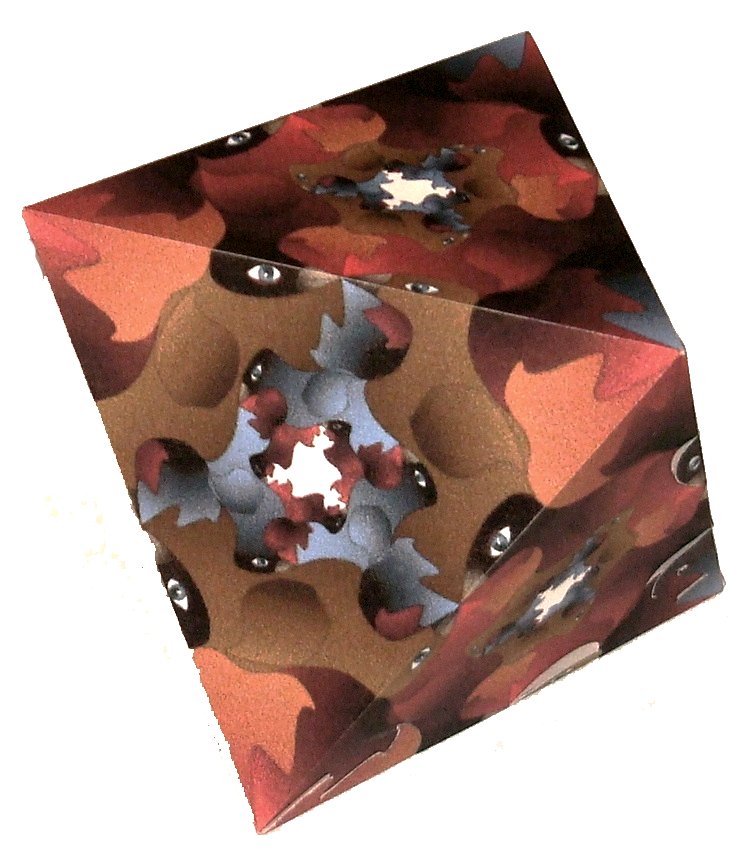
two lithographs in 1950 and 1952, includes the figure of the dodecahedron crashed. But perhaps the most complete work of all of Escher, as far as polyhedra are concerned, is the Stars, 1948 woodcut. The main figure is a big star, composed of 3 octahedral holes together, inside which they hold two chameleons. Apart from this figure, which already is very interesting, we see that all the stars in the background are other polyhedra. There are several tetrahedra, octahedra, icosahedra, bucket, but among them there is a recital of the more significant figures:
1. Octahedron cube intersected with
2. Two holes intersected tetrahedra
3. Dodecahedron
4. Rombicuboctedro
5. Deltoidal Icositetraedro
6. Cuboctahedron
7. Two intersecting cubes
8. Three octahedra together as the main star
9. Two tetrahedra
10. Two hollow cubes together by a vertex

Driver For 12.99.1085


Monster Energy Drink Belly Ring

platonic solids (information)


Platonic Solids Platonic Solids are the tetrahedron, the cube octahedron, the dodecahedron and the icosahedron. Also known as Platonic bodies, bodies cosmic Pythagorean solids, solid perfect, Plato's polyhedra or, more accurately, convex regular polyhedra. Are characterized by convex polyhedra whose faces are equal regular polygons and whose vertices are attached to the same number of faces. Given these names after the Greek philosopher Plato who is credited if any studied in the first instance. Properties
regularity: As
expressed to define these polyhedra:
• All faces of a Platonic solid are equal regular polygons.
• In all the vertices of a Platonic solid attend the same number of faces and edges.
• All edges of a Platonic solid are the same length.
• All line angles that form the faces of a Platonic solid with each other are equal.
• All its vertices are convex to the icosahedron. Symmetrical properties

The Platonic solids are highly symmetrical:
• All of them are central symmetry about a point in space (center of symmetry) which is equidistant their faces, vertices and edges.
• They also have axial symmetry on a number of axes of symmetry passing through the center of symmetry above.
• They also have mirror symmetry about a series of planes of symmetry (or principal planes), which divided into two equal parts. Following geometric
above, can be traced all Platonic solid three particular areas, all focused in the center of symmetry of the polyhedron:
• A sphere inscribed tangent to all sides in the middle. • A second area
tangent to all edges in the center.
• A circumscribed area, passing through all vertices of the polyhedron.
projecting the centers of the edges of a Platonic polyhedron circumscribed about the sphere from the center of symmetry of the polyhedron is obtained a regular spherical network, composed of equal-circle arcs, which are regular spherical polygons.
polyhedra whose faces are all congruent regular polygons is called "polyhedra regular" or "Platonic solids." There are only five:
 regular tetrahedron (4 vertices, 6 edges, 4 equilateral triangles as faces)
 regular hexahedron or cube (8 vertices, 12 edges, 6 squares as faces) 
regular octahedron (6 vertices, 12 edges, 8 equilateral triangles as faces)
 regular dodecahedron (20 vertices, 30 edges, 12 pentagons as faces)
 regular icosahedron (12 vertices, 30 edges, 20 equilateral triangles as faces) Solid
in nature and art
The cube, tetrahedron and octahedron appear naturally in crystal structures, there are also living this way, such a type of protozoa called radiolarians have a cube, octahedron, dodecahedron, icosahedron ... and actually receiving the scientific name incorporates the respective polyhedron of receiving the form. Also many herpes viruses such as AIDS or icosahedron-shaped. And no doubt have appeared in many paintings of different artists. When there was a greater linkage between the solid and the art was probably in the Renaissance. And no doubt have appeared in many paintings of different artists. When there was a greater linkage between the solid and the art was probably in the Renaissance. The artists began to use the polyhedra as a tool to develop specific aspects of perspective. This is the case of some artists as Paolo Uccello and Piero della Francesca
Slowly the tables with solid figures were less important, until he was almost forgotten in the world of art. Escher who was with his incredible imagination and originality rescued the Platonic solids to be incorporated into innovative paintings.
Maurits Cornelis Escher (1898-1972) was a German graphic artist known that mathematics was inspired by many of his works. Also among his works with sequences that become infinitely small, or they had enforced views that show vanishing points, we find pictures related to the Platonic solids. But his most focused on polyhedra, it is certainly between 1948 and 1954, when he draws several pictures totally focused on this issue, where the polyhedra appear as a principal and not as something merely decorative. In planetoid planetoid double tetrahedral, using tetrahedra which create strange planets, in the first two that intersect the centers of the edges and the second only one that gives rise to distorted worlds.
two lithographs in 1950 and 1952, includes the figure of the dodecahedron crashed. But perhaps the most complete work of all of Escher, as far as polyhedra are concerned, is the star of 1948 woodcut. The main figure is a big star, composed of 3 octahedral holes together, inside which they hold two chameleons. Apart from this figure, which already is very interesting, we see that all the stars in the background are other polyhedra. There are several tetrahedra, octahedra, icosahedra, cube, but among them there is a recital of the more significant figures:
1. Octahedron cube intersected with
2. Two holes intersected tetrahedra
3. Dodecahedron
4. Rombicuboctedro
5. Deltoidal Icositetraedro
6. Cuboctahedron
7. Two intersecting cubes
8. Three octahedra together as the main star
9. Two tetrahedra
10. Two hollow cubes joined by a vertex
Tuesday, October 19, 2010

How Long To Heal From Mole Removal

° ° Video of the First evaluation ·

VIDEO ON ENVIRONMENT Platonic Solids ROLA GOOD! Platonic solids

What Do You Serve With Boudin

Introduction - Geometric

geometric

are the elements that, whether real or ideal, which exist in reality or mind can conceive, occupy a volume in space developed by So in the three dimensions of height, width and length, and are composed of geometric figures.

geometric bodies can be classified into polyhedra or round.

polyhedra

polyhedra or flat bodies are composed exclusively geometric plane geometric figures, such as the cube.

There are 4 classes of polyhedra:

Round

All those who have two faces, one round and a right (whether the occasion).

There are 4 kinds of round bodies

Some of all geometric

  • Cone
  • truncated cone
  • Cube
  • Piramide triangular
  • square pyramid
  • hexagonal pyramid
  • Piramide octagonal
  • truncated Pyramid
  • Octaedro
  • decahedron
  • Tetrahedron
  • hexahedron
  • triangular prism
  • Prisma homer
  • pentagonal prism Hexagonal prism
  • parallelepiped
  • Cylinder
  • Sphere

Sunday, October 17, 2010

Red Bloody Cervical Mucus

° ° ° ° · Types

hexahedron:

A hexahedron is a polyhedron six sides. With this number of heads is bound to be a convex polyhedron, and their faces are to be five-sided polygons or less. If the six square faces of the hexahedron are congruent, the hexahedron is called regular (often known as a hub body), then being a so-called Platonic solids

Here some pictures: Picture 1
image image 4
image 5 image 6
image 7 image 8
image 9 image 10 image 11 image 12,13,14,15,16,17,18,19,20

TETRAHEDRON:

A tetrahedron is a polyhedron with four faces. With this number of heads is bound to be a convex polyhedron, and triangular faces, three of them were found at each vertex. If the four faces of the tetrahedron are equilateral triangles, necessarily equal to each other, the tetrahedron is called regular. The tetrahedron is the three-dimensional simplex.

Here some pictures: Image 1

image
5 image 6 image 7


image 8 image 9 image 10


image 11 image 12

image 13 image 14 image
15

image 16 image 17 image 18

image 19 image 20


dodecahedron:

A dodecahedron is a twelve-sided polyhedron, convex or concave. Their faces are to be polygon of eleven sides or less. If the twelve faces of the dodecahedron are regular pentagons necessarily equal to each other, the dodecahedron is convex and is called regular, then being a so-called Platonic solids.

Here some pictures:

1.2
image
image 3 image 4 image 5

6.7 image

image 8 image 9 image 10


image 11 image 12 image 13


image 14 image 15 image 16

image 17

image 18 image 19 image 20


icosahedron:

An icosahedron is a twenty-sided polyhedron, convex or concave. Their faces are to be nineteen-sided polygons or less. If the twenty faces of the icosahedron are equilateral triangles, necessarily equal to each other, the icosahedron is convex and is called regular, then being a so-called Platonic solids. The conjugate polyhedron of the icosahedron is the dodecahedron.

Here some pictures:


image 1
2,3,4 image
image 5
image 6
image 7
image 8
image 9
image 10
image 11
image 12
image 13
image 14
image 15
image 16
image 17
image 18
19.20 image


OCTAEDRO:

An octahedron is a polyhedron with eight faces. With this number of faces can be a convex polyhedron or a concave polyhedron. Their faces are to be seven-sided polygons or less. If the eight faces of the octahedron are equilateral triangles, necessarily equal to each other, the octahedron is convex and is called regular, then being a so-called Platonic solids.


Here some pictures:

image 1
Image 2
image 3
image 4
image 5
image 6
image 7
image 8
image 9
image 10
image 11
image 12
image 13
image 15
image 16
image 17
image 18
image 19
image 20


Friday, October 15, 2010

Implantation Bleeding Visible On Ultrasound

° ° ° °

Polyhedra regular
In geometry, flat-faced solids are called "polyhedra." (In Greek, polys = "multiple" and Hedra = "face".) Polyhedra whose faces are equal regular polygons are called regular polyhedra . There are five regular polyhedrons:

  • hexahedron (6 square)
  • Tetrahedron (4 equilateral triangles)
  • Dodecahedron (12 regular pentagons)
  • Icosahedron (20 equilateral triangles)
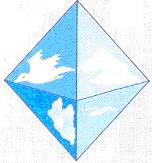
  • Octahedron (8 equilateral triangles)
  • Here is a picture of these polyhedra

Tuesday, October 5, 2010

Cans De Travestis Gratis


A year later, I return to this blog (which I had abandoned for lack of time) to hang others to use class material and prevent copying, our trees will thank you. As well as curiosities, stories of Mathematics, videos and many other materials useful for everyone ... and come to appreciate the beauty of mathematics, unknown and forgotten by many.

leave here the issue of extra exercises for my students Combinatorics 2 º Bachillerato, I hope you all practiquéis help and further, the key to success of this course is work and master the exercises (to the righteous and take only pinned the threat). As in any race where there is a goal, in your case, PAU, dial a pace to get the best results, cheer up! To download click here .